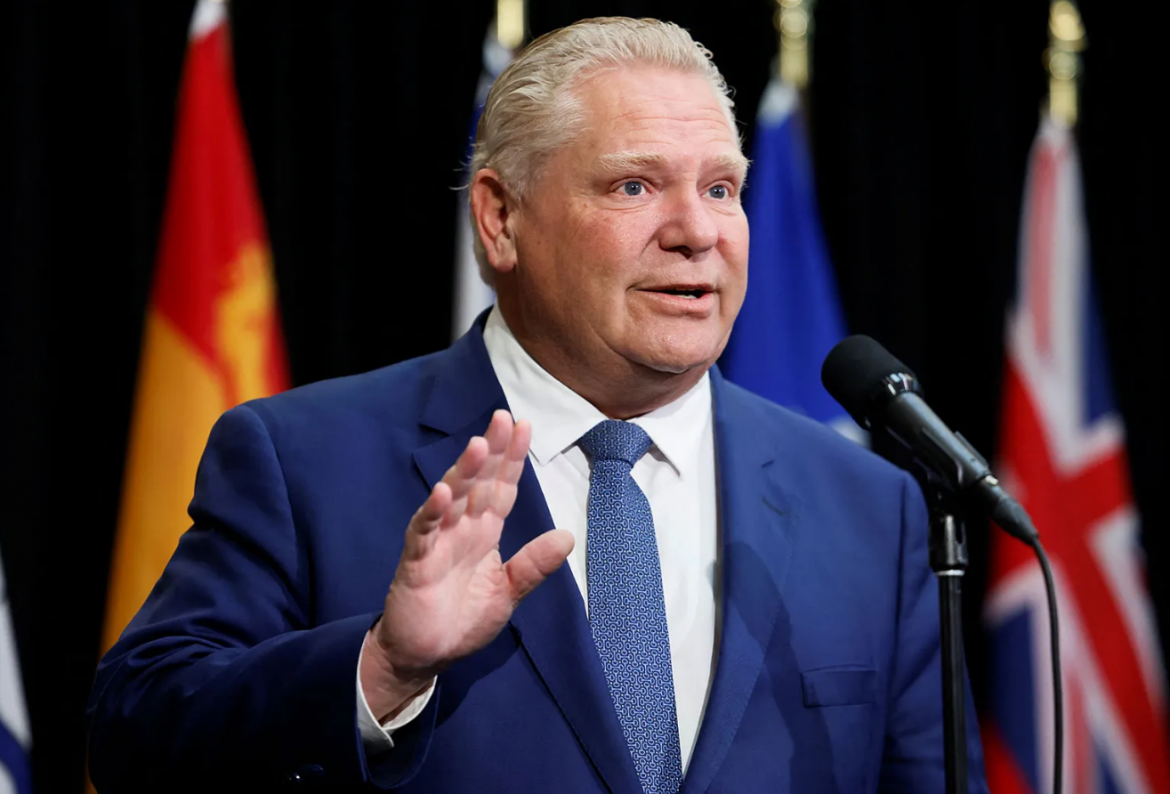
Doug Ford is a Canadian politician, businessman, and the 26th Premier of Ontario. As the leader of the Progressive Conservative Party of Ontario, he has become one of the country’s most recognizable and influential political figures. Throughout his career, Ford has been known for his business-oriented approach to government, his focus on economic development, infrastructure investment, tax policies, and public services. While his leadership has often generated debate and differing opinions, he has remained a central figure in Canadian politics and has played a significant role in shaping Ontario’s economic and political landscape.
Douglas Robert Ford Jr. was born on November 20, 1964, in Etobicoke, Ontario, Canada. He grew up in a family that was heavily involved in business and later in politics. His father, Doug Ford Sr., founded Deco Labels and Tags, a successful label-printing company that expanded into international markets. Growing up in an entrepreneurial environment exposed Ford to business management, manufacturing, and customer relations from an early age. These experiences would later influence many of his political and economic priorities.
Ford attended schools in Ontario before briefly studying at Humber College. Rather than pursuing a traditional academic career, he entered the family business, where he gained practical experience in manufacturing, operations, sales, and business development. Over time, he assumed leadership responsibilities within Deco Labels and helped oversee its continued growth. His years in business shaped his reputation as someone who preferred practical decision-making and emphasized financial efficiency.
Before entering provincial politics, Ford became involved in municipal government. In 2010, his brother Rob Ford was elected Mayor of Toronto, while Doug Ford successfully won the city council seat previously held by Rob. Representing Ward 2 in Etobicoke North, Ford served on Toronto City Council and became one of his brother’s closest political allies. During this period, he supported initiatives focused on reducing government spending, lowering taxes, improving public services, and increasing accountability in municipal administration.
Following Rob Ford’s illness and eventual passing in 2016, Doug Ford continued to expand his political profile. His family’s political legacy remained well known throughout Ontario, and many supporters viewed him as someone capable of continuing the policies associated with fiscal conservatism and government reform. Ford’s direct communication style and emphasis on practical solutions helped him maintain strong support among many voters.
In 2018, Doug Ford was elected leader of the Progressive Conservative Party of Ontario after a closely contested leadership race. Shortly afterward, he led the party into the provincial general election, where it secured a majority government. His victory marked the beginning of a new chapter in Ontario politics, ending more than a decade of Liberal Party leadership in the province.
As Premier of Ontario, Ford introduced a wide range of policy initiatives focused on economic growth, fiscal management, and public infrastructure. His government emphasized reducing regulatory barriers for businesses, encouraging private investment, supporting job creation, and improving the province’s competitiveness. Ford frequently argued that a strong economy provides the foundation for funding essential public services such as healthcare, education, and transportation.
Infrastructure development became one of the defining priorities of his administration. Under Ford’s leadership, Ontario announced numerous transportation projects, including highway expansions, transit improvements, and investments in public transportation networks. The government argued that modern infrastructure was essential for accommodating population growth, reducing traffic congestion, and supporting long-term economic development throughout the province.
Healthcare also became a major focus during Ford’s time as Premier, particularly during the COVID-19 pandemic. Ontario faced unprecedented challenges as hospitals, healthcare workers, and public health agencies responded to the global crisis. Ford’s government implemented various emergency measures, including public health restrictions, vaccination campaigns, financial assistance programs, and support for businesses affected by lockdowns. The pandemic represented one of the most difficult periods of his political career, requiring constant decision-making under rapidly changing circumstances.
Education policy has also been an important aspect of Ford’s administration. His government introduced reforms affecting curriculum development, classroom funding, technology integration, and educational accountability. These changes generated significant public discussion among teachers, parents, education professionals, and policymakers, reflecting the complexity of balancing educational quality with budgetary considerations.
Economic policy has remained central to Ford’s political philosophy. He has consistently advocated for reducing taxes in certain areas, encouraging business investment, attracting international companies, and creating employment opportunities. His administration has promoted Ontario as an attractive destination for manufacturing, technology, automotive production, mining, and other major industries. Supporters argue that these initiatives strengthen the province’s long-term economic prospects and create sustainable employment opportunities.
Environmental policy under Ford has also attracted considerable attention. His government has supported investments in nuclear energy, electric vehicle manufacturing, and critical mineral development while simultaneously emphasizing energy affordability for households and businesses. Decisions regarding environmental regulation, land use, and climate policy have often generated debate among environmental organizations, industry representatives, and political opponents.
Ford’s communication style distinguishes him from many traditional politicians. He frequently presents himself as a practical, approachable leader who prefers straightforward language over complex political rhetoric. His public appearances often emphasize direct engagement with citizens, business owners, healthcare workers, and local communities. This communication approach has contributed significantly to both his popularity among supporters and criticism from opponents.
Throughout his political career, Ford has faced numerous controversies and challenges. Like many prominent political leaders, his decisions have frequently been scrutinized by journalists, opposition parties, advocacy groups, and the public. Debates surrounding healthcare funding, education reforms, pandemic management, housing policy, environmental issues, and infrastructure development have all contributed to his highly visible political profile. Despite criticism, Ford has consistently defended his government’s policies as necessary for Ontario’s long-term prosperity.
Housing affordability has become another significant issue during Ford’s tenure. Rapid population growth, increased demand, and rising property prices have placed pressure on housing markets throughout Ontario. His government has introduced initiatives designed to accelerate home construction, simplify planning processes, and encourage residential development in order to address housing shortages across the province.
Ontario’s economy has continued evolving during Ford’s leadership, with growing investments in advanced manufacturing, electric vehicle production, battery technology, artificial intelligence, and clean energy industries. His administration has actively pursued partnerships with major international companies, positioning Ontario as a competitive location for future industrial expansion. These investments have been presented as opportunities to create thousands of skilled jobs while strengthening Canada’s position in emerging global industries.
Outside politics, Doug Ford maintains strong connections to his family and business background. He has often spoken publicly about the influence of his parents, his experiences working in the family company, and the importance of entrepreneurship. His family’s long-standing presence in both business and public life has contributed significantly to his public identity.
Ford has also remained closely associated with the legacy of his late brother, Rob Ford. The brothers worked together throughout their municipal political careers and shared many policy priorities related to fiscal responsibility and government efficiency. Rob Ford’s political career remains an important part of Doug Ford’s personal and professional story.
As one of Canada’s most prominent provincial leaders, Doug Ford regularly participates in national discussions involving economic policy, healthcare, intergovernmental relations, infrastructure, and trade. His role as Premier requires ongoing collaboration with the federal government as well as leaders from other provinces on issues affecting Canadians across the country.
Doug Ford’s political legacy continues to develop as Ontario faces new economic, technological, and demographic challenges. Supporters view him as a pragmatic leader focused on economic growth, job creation, and infrastructure investment, while critics often question aspects of his policy decisions and governing style. Regardless of differing political perspectives, Ford remains one of the most influential figures in modern Canadian politics.
Today, Doug Ford continues serving as Premier of Ontario while leading one of Canada’s largest provincial governments. His career reflects the intersection of business experience and public service, demonstrating how leadership in both sectors can shape public policy. Whether remembered for economic initiatives, infrastructure projects, healthcare decisions, or political reforms, Doug Ford has established himself as a significant figure in contemporary Canadian history whose influence extends well beyond provincial politics.